Modern Digital Advertising: The Unified Growth Engine for 2026
Businesses across the United States are navigating a fundamental transformation in customer acquisition. The days of treating search ads, social feeds, programmatic banners, and local marketing as isolated silos are officially over. In 2026, rising customer acquisition costs and fragmented consumer journeys require an intentional, full-funnel digital advertising ecosystem that captures intent across platforms and converts high-value opportunities.
At On-Line Advertising, LLC (OLA), we see this evolution daily. Headquartered in London, Kentucky, our team engineers performance-first digital marketing campaigns for organizations nationwide—from high-growth regional enterprises to local service companies and fast-scaling e-commerce brands. Winning in today's ad climate requires combining creative agility, deep search visibility, and precision targeting into one seamless engine.
Why Fragmented Ads No Longer Work
Online consumers do not discover, evaluate, and purchase within a single isolated session. Prospective buyers research on desktop, scroll social media on mobile, consult AI-driven answer engines, and examine reviews before making a buying decision. If your business spends marketing dollars on isolated campaigns without unifying audience data, conversion tracking, and high-converting landing pages, ad spend slips through the cracks.
Building a resilient marketing pipeline requires aligning every paid touchpoint with high-performance custom website design and measurable conversion goals. When paid channels speak to one another, your brand captures attention at the top of the funnel and guides qualified prospects through to purchase.
Understanding the Mechanics: How Omnichannel Digital Advertising Works
Digital advertising in 2026 operates on algorithmic audience modeling, cross-channel attribution, and real-time behavioral signals. Rather than manually bidding on broad match queries, modern ad platforms leverage machine learning to locate qualified prospects based on intent signals, content consumption, and first-party interactions.
The Core Layers of an Advanced Ad Stack
- First-Party Audience Capture — Privacy changes and cookie deprecation make first-party data indispensable. Capturing email lists, CRM data, and on-site behavioral metrics ensures you build durable custom audiences and lookalike segments that belong exclusively to your brand.
- Intent-Driven Paid Search — Google Ads and Microsoft Advertising place your business in front of prospective clients at the exact second they experience intent. Pairing transactional search terms with disciplined bidding allows you to protect margins while driving phone calls and purchases via dedicated search term marketing.
- Contextual and Programmatic Display — Brand recall flourishes when prospects encounter contextual creative across digital publications, connected television (CTV), and niche industry portals.
- Conversion-Optimized Technical Foundations — An ad campaign is only as good as the destination page it drives to. Top-performing brands pair high-yield paid campaigns with secure, ultra-fast web hosting solutions that eliminate page latency and bounce rates.
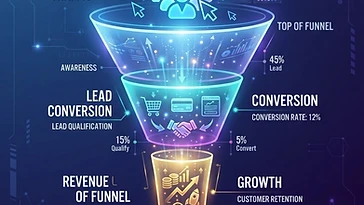
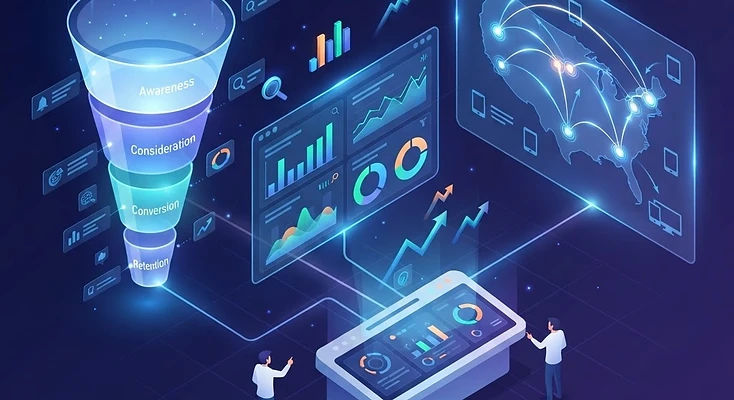
[Top of Funnel: Awareness & Discovery]
  ├── Targeted Programmatic Display & Video
  └── Social Media Creative & Thought Leadership
             │
             ▼
[Middle of Funnel: Consideration & Trust]
  ├── Search Term Marketing (High-Intent Keywords)
  ├── First-Party Email Retargeting Sequences
  └── High-Speed Informational Landing Pages
             │
             ▼
[Bottom of Funnel: Conversion & Closed Business]
  ├── Conversion-Driven Web Architecture
  └── Real-Time Attribution & CRM Pipeline Tracking
Digital Advertising Across Diverse US Markets and Industries
Because OLA serves businesses across every corner of the United States, we recognize that digital advertising strategies must adapt to different geographic densities, customer lifetime values, and industry dynamics.
Metropolitan Hubs vs. Mid-Sized and Rural US Markets
In major metropolitan markets like Dallas, Atlanta, Chicago, or Los Angeles, keyword auctions are intensely competitive. Success here requires strict negative keyword hygiene, granular geo-fencing, and laser-targeted service-line segmentation to avoid burning budget on low-intent search traffic.
Conversely, in mid-sized metros and smaller regional trade areas, search volume is leaner but conversion intent is significantly higher. In these regions, combining hyper-targeted paid search with trusted community placements—such as directory features like our Richmond Kentucky City Guide or our Berea Kentucky City Guide—allows regional businesses to establish unquestioned authority while maintaining low cost-per-click rates.
B2B, Professional Services, and E-commerce Adaptation
- B2B and Professional Services — For legal, industrial, and consulting firms, lead volume matters far less than lead quality. Paid campaigns should direct decision-makers to case studies, scheduling software, and dedicated consultation booking pages, supported by insights from our National Guide on High-Impact Content Marketing Architecture.
- High-Velocity E-commerce Brands — Online retailers rely on product feed automation, shopping ads, and dynamic remarketing. To convert at scale, ad traffic must land on frictionless checkout platforms, as outlined in our guide to Scaling E-commerce Sales Across the US.
- Local Service Contractors — Home service providers, roofers, and medical practices win by capturing local zip codes with Google Local Services Ads, paid search call extensions, and verified customer testimonials.
Step-by-Step Implementation: Building a High-Converting Campaign in 2026
Executing a digital ad strategy that drives consistent, profitable revenue requires a structured rollout. Here is the operational framework OLA implements for clients nationwide:
Step 1: Establish Measurement and Server-Side Tracking
Before launching ad creative or allocating a dollar of budget, verify that your conversion tracking is watertight. Configure server-side Google Tag Manager and GA4 key events. Track phone calls, form completions, scheduling events, and checkout triggers. Without verified attribution data, ad platform algorithms cannot optimize toward your most lucrative outcomes.
Step 2: Architect High-Converting, Dedicated Landing Pages
Never send paid traffic to your generic homepage. Design bespoke, distraction-free landing pages tailored specifically to the ad creative's promise. Ensure the landing page loads in under two seconds, reinforces social proof, displays clear contact forms above the fold, and highlights trust credentials.
Step 3: Segment Campaigns by Intent and Audience Stage
- Tier 1 (High Intent / Bottom-Funnel) — Exact match search terms, branded search defense, and cart abandoner retargeting. These receive priority budget allocation.
- Tier 2 (Mid Intent / Consideration) — Problem-aware category searches, competitor comparison queries, and high-engagement social lookalike audiences.
- Tier 3 (Top Funnel / Awareness) — Targeted video storytelling, native advertising, and industry-specific interest groups.
Step 4: Implement Continuous Creative and Copy Testing
Algorithms reward fresh, relevant creative. Develop at least three visual variations (lifestyle imagery, product breakdown, client testimonial) and two distinct copy hooks (problem-solution versus direct offer) per ad set. Analyze return-on-ad-spend (ROAS) weekly and reallocate capital toward winning variants.
Step 5: Close the Loop with Rapid Lead Follow-Up
A lead generated via digital advertising loses 80% of its conversion probability if not contacted within 15 minutes. Integrate your ad platforms directly with your CRM, email automation, or custom internal workflow software to ensure immediate sales response.
5 Critical Mistakes That Drain US Digital Ad Budgets
Over our years managing digital campaigns for national and regional brands, we consistently see companies stumble into common, expensive pitfalls:
- Neglecting Negative Keyword Lists — In paid search, what you do not show up for is just as critical as what you bid on. Without daily negative keyword scrubbing, your budget gets consumed by irrelevant searches ("free", "jobs", "salary", or non-relevant services).
- Ignoring Mobile Friction — More than 60% of paid clicks originate on mobile devices. If your mobile landing page features tiny tap targets, slow-loading images, or cumbersome checkout inputs, your cost-per-acquisition doubles overnight.
- Relying Exclusively on Automated Smart Bidding Early On — While AI bidding models are potent, feeding them unvetted early conversion data produces erratic spending. Campaigns need clean initial conversion history before handing total control to auto-bidding algorithms.
- Disconnecting Creative from Landing Page Copy — When an ad advertises a 20% promotional discount or a specialized service, and the destination page fails to mention that exact offer prominently, users bounce within seconds.
- Treating Paid Ads as a Substitute for Organic Authority — Paid advertising works best alongside organic authority. Integrating paid search with a comprehensive organic footprint—such as our National Local SEO Blueprint—establishes multi-channel market dominance.
Measuring Results and True Marketing ROI
Digital advertising should never feel like an ambiguous expense. In 2026, every dollar deployed into the market must justify its existence through transparent financial metrics.
Core Performance Metrics to Track
- Customer Acquisition Cost (CAC) — Calculate your total ad spend divided by the total number of newly acquired paying clients over a specific window.
- Return on Ad Spend (ROAS) — Track direct gross revenue generated for every dollar spent on paid platforms. Healthy e-commerce campaigns typically aim for 3.5x to 5x+ ROAS, depending on gross margins.
- Marketing Return on Investment (MROI) — Determine the net profit contribution of your marketing program after accounting for product costs, service overhead, and agency management fees.
- Lead-to-Close Velocity — Measure the speed at which paid leads convert into closed contracts within your sales pipeline.
Transparent monthly reporting helps you assess which platforms perform best and allows you to adjust spend based on actual revenue rather than vanity metrics like impressions or clicks.
Conclusion: Fuel Your National Market Growth in 2026
Digital advertising in 2026 demands strategic discipline, technical sophistication, and cross-channel cohesion. By blending data-backed paid search, compelling programmatic creative, high-speed landing pages, and uncompromising ROI measurement, your business can build an acquisition engine that scales reliably across any US market.
Whether you are an established enterprise seeking national reach or a growing service company aiming to capture dominant market share, our experienced strategists are ready to help. Explore our transparent service packages and pricing plans, review our work in our client portfolio, or contact our digital marketing team today to schedule your complimentary strategy session.