
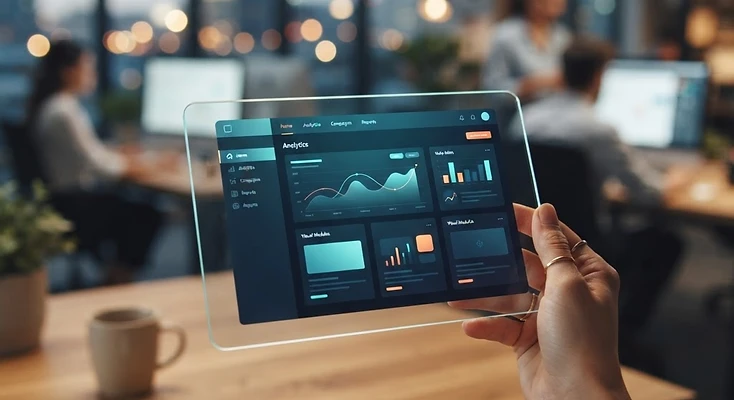
The 2026 Web Design Opportunity: Beyond Aesthetics
In 2026, the digital landscape has shifted from simply "having a website" to operating a high-performance digital engine. For businesses across the United States, the opportunity lies in moving past traditional visual design and embracing a holistic approach that prioritizes performance, accessibility, and machine readability. As search behavior evolves toward AI-driven conversational agents, your website's design must serve two masters: the human user and the artificial intelligence crawler.
At On-Line Advertising, LLC (OLA), we have seen that the most successful national brands are those that treat their website as a strategic growth engine rather than a static brochure. Based in London, Kentucky, our team serves clients nationwide, helping them navigate the complexities of modern web design to capture market share in competitive industries. The 2026 opportunity is defined by "Performance-First Creativity," where beautiful design no longer comes at the cost of speed or functionality. By integrating data, communication, and automation into the very fabric of your site, you move from being a passive participant in the digital economy to a strategic leader.
The Rise of Machine Experience (MX) Design
One of the most significant shifts in 2026 is the emergence of Machine Experience (MX) design. While User Experience (UX) focuses on the human interaction, MX ensures that Large Language Models (LLMs) and AI search engines can accurately parse and cite your content. This requires a return to clean, semantic code and strict heading hierarchies. If your site is built on bloated, unsemantic code, AI agents may fail to interpret your core services, leading to a loss in visibility. Mastering Generative Engine Optimization (GEO) is now a fundamental part of the design process.
How Modern Web Design Works: The Technical Foundation
Modern web design in 2026 is built on a stack of performance-first technologies. It is no longer enough to have a responsive layout; your site must be optimized for "mobile-only" thinking, acknowledging that the vast majority of national traffic now originates from handheld devices. The technical foundation of a high-converting site involves several layers of optimization that work together to provide a seamless experience.
Performance-First CSS and Tactile Brutalism
We are seeing a move away from "soft design" toward tactile brutalism and performance-first CSS. This means using leaner code to create bold, intentional layouts that load almost instantaneously. By reducing the reliance on heavy JavaScript libraries and focusing on native browser capabilities, designers can achieve striking visual effects without compromising the user experience. This approach not only satisfies users but also aligns with Google's Core Web Vitals, which remain a critical ranking factor for national SEO.
Semantic Architecture and Data Structures
To succeed in 2026, your website must be built with a perfect heading hierarchy (H1 to H6) and accurate ARIA labeling. This architectural mandate ensures that both screen readers for accessibility and AI agents for search can navigate your site effectively. A connected stack that integrates your CRM, email marketing, and e-commerce functionality into a single hub reduces friction and allows for easier scaling as your business grows. This is why choosing the right web hosting is just as important as the design itself; a fast, secure server is the bedrock of technical performance.
Scaling Across the US: Web Design for Every Market
Whether you are a professional services firm in a mid-sized city or a national e-commerce giant, the principles of high-performance web design apply universally. However, the implementation varies based on your market size and target audience. OLA provides custom solutions for businesses across the US, ensuring that your digital presence is tailored to your specific competitive landscape.
Small to Mid-Sized Market Strategies
For businesses operating in specific regional markets, web design should focus on building immediate trust and local relevance. This includes integrating social proof, clear calls to action (CTAs), and localized content that resonates with the community. Even if you are targeting a specific region, your site must meet national standards for speed and accessibility to compete with larger brands that may be entering your space.
National and Enterprise-Level Scaling
For national brands, the focus shifts to consistency and immersive experiences. Large-scale websites must maintain a unified design system across hundreds of pages to reduce cognitive load for the user. In 2026, enterprise UI is defined by "Invisible Logic"—design that guides the user through complex funnels without them even realizing they are being led. This level of sophistication requires a deep understanding of conversion rate optimization (CRO) and user behavior analytics. National businesses must also ensure their sites are compliant with various state-level digital laws, making site maintenance a non-negotiable part of their strategy.
Step-by-Step Actionable Implementation
Ready to upgrade your digital presence? Follow these steps to align your website with 2026 best practices:
- Conduct a Comprehensive Audit — Start by evaluating your current site's performance, accessibility, and mobile responsiveness. Use tools like Google Lighthouse and accessibility scanners to identify gaps in your current design.
- Prioritize Accessibility (WCAG 2.1 AA) — Ensure your site meets the latest Web Content Accessibility Guidelines. This includes providing alt text for images, ensuring high color contrast, and making all elements keyboard-navigable. Accessibility is not just a legal requirement; it is a best practice that expands your reach.
- Implement Semantic HTML — Rebuild or optimize your site's code to use semantic tags. Ensure your H1-H6 tags are used logically and that your site structure is clear to both humans and AI crawlers.
- Optimize for Speed — Compress images, minify CSS and JavaScript, and utilize modern image formats like WebP or AVIF. A one-second delay in load time can drastically affect your conversion rates.
- Integrate AI-Ready Content — Structure your content in a way that AI agents can easily summarize. Use schema markup to provide context to search engines about your products, services, and business location.
- Refine Your Conversion Funnel — Simplify your CTAs and ensure that the path to purchase or contact is as short as possible. Use micro-interactions to provide feedback to users as they navigate your site.
Common Web Design Mistakes to Avoid
Even with the best intentions, many businesses fall into traps that hinder their growth. Avoid these common pitfalls in 2026:
- Over-Reliance on Visual Builders — While drag-and-drop builders are convenient, they often produce bloated code that slows down your site and confuses AI crawlers. Always prioritize clean, custom-coded elements where possible.
- Ignoring ADA Compliance — Many businesses treat accessibility as an afterthought. In 2026, this leads to significant legal risk and alienates a large portion of your potential audience. Accessibility must be baked into the design from day one.
- Desktop-First Thinking — Designing for a large screen and then "shrinking" it for mobile is an outdated approach. Start with the mobile experience and scale up to ensure your site is functional for the majority of your users.
- Generic Stock Imagery — Users in 2026 crave authenticity. Using generic, overused stock photos can damage your brand's credibility. Invest in high-quality, original photography or custom illustrations that reflect your unique value proposition.
- Neglecting Post-Launch Maintenance — A website is not a "set it and forget it" project. Regular updates, security patches, and performance tweaks are essential to keep your site running at peak efficiency.
Measuring Results and ROI
Investing in high-performance web design should yield measurable results. In 2026, we track ROI through a combination of traditional metrics and new AI-driven indicators. By monitoring these key performance indicators (KPIs), you can see exactly how your design choices are impacting your bottom line.
- Conversion Rate Increase — UX-optimized designs can increase conversions by up to 400%. Track how changes to your layout and CTAs affect your lead generation and sales.
- Core Web Vitals Scores — Monitor your Largest Contentful Paint (LCP), First Input Delay (FID), and Cumulative Layout Shift (CLS). Improving these scores directly correlates with better search rankings and lower bounce rates.
- AI Citation Frequency — Use tools to track how often AI search engines like Perplexity or ChatGPT are citing your website as a source. This is a new but vital metric for national visibility.
- Customer Lifetime Value (CLV) — A well-designed site improves user retention and encourages repeat business. Track how your digital experience influences long-term customer loyalty.
For businesses looking to maximize their investment, OLA offers various pricing packages that include ongoing optimization and performance tracking to ensure your site continues to deliver a high ROI year after year.
Conclusion: Building Your Digital Engine for 2026
Web design in 2026 is no longer just about how a site looks; it is about how it performs, how it communicates, and how it scales. By embracing performance-first creativity, prioritizing accessibility, and optimizing for both humans and machines, US businesses can build a digital presence that drives sustainable growth. Whether you are looking to dominate a local market or expand your reach nationwide, the principles of modern web design are your most powerful tools for success.
At On-Line Advertising, LLC, we are dedicated to helping businesses across the country navigate these changes. From our headquarters in London, Kentucky, we provide the expertise and technical skill needed to turn your website into a high-performance growth engine. Don't let your business get left behind in the rapidly evolving digital landscape. Book a free consultation with our team today to start building your digital future.


